Use case · Sales
DigUp for sales CRM links break; local folders don’t. DigUp finds the right slide or call minute with EmbeddingGemma 2 — private on your laptop.
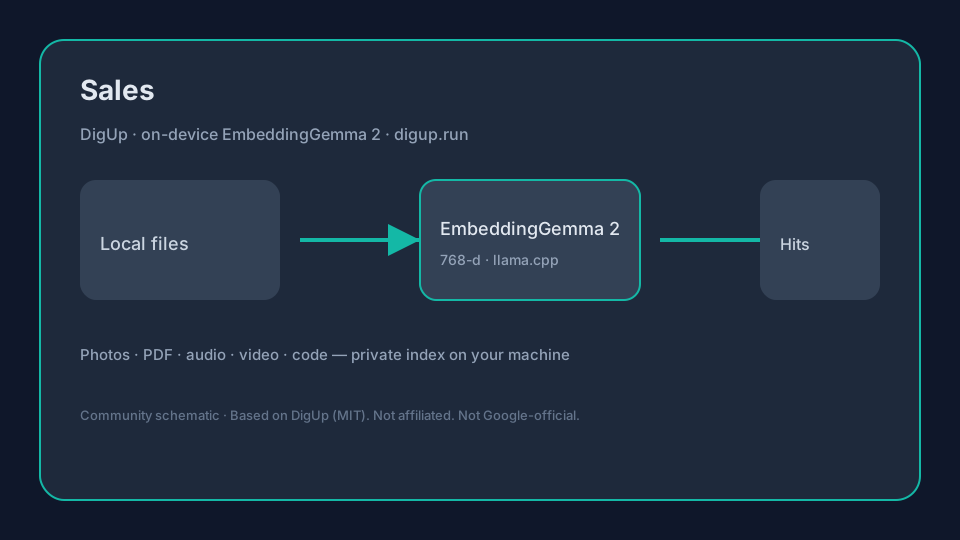
On-device flow Original schematic — DigUp indexes local files with EmbeddingGemma 2 (llama.cpp). Sourced snapshot (2026-10-15) Fact Value Source Model EmbeddingGemma 2 · ~740M params · ~865 MB Q8 via llama.cpp Google AI · DigUp READMEVector space 768-d shared multimodal space Google AI · DigUp README Mac / Win·Linux 0.6.1 · 0.7.0-beta.1 GitHub Releases Stars / forks ~3,768 / ~254 GitHub API
Pain → DigUp workflow → tip Pain DigUp + EmbeddingGemma 2 workflow Tip Which deck has the pricing grid? Index Decks PDFs; semantic + keyword Page-level open Call where customer said competitor X Audio windows Jump near the mention Case study screenshot Image search Find by UI/chart shown Travel with offline laptop On-device after model download Works without cloud search SaaS
Numbered checklist Install DigUp; sync needed decks locally before indexing. Complete EmbeddingGemma 2 (~865 MB). Search product phrases customers use — not only internal codenames. Win/Linux beta: check SmartScreen + speed.log GPU line. Share wins internally; don’t claim DigUp is Google-official. Why EmbeddingGemma 2 matters here Google’s EmbeddingGemma 2 (~740M, unified 768-d multimodal space) is what DigUp runs via llama.cpp (~865 MB Q8 package). One query can rank images, PDF pages, audio windows, video frames, and optional code — see the local multimodal guide and model page . digup.run is not Google-official.
Downloads & installs Related  DigUp
DigUp